
Empowering local councils to combat air pollution
The OPENAIR project supports local governments with Australia’s first common method for using low-cost smart sensors to measure air quality, helping them protect their community's health and wellbeing.
The 2019–20 ‘Black Summer’ bushfire season was one of the most intense and catastrophic fire seasons on record in Australia, killing 33 people and destroying more than 3000 homes.

Sydney’s skyline engulfed in smoke as a result of bushfires in NSW in November 2019. Credit: Shutterstock
At the bushfire season’s peak, Sydney was clouded by toxic smoke and air quality dropped to hazardous levels.
Researchers say more than 200 deaths were attributable to the Black Summer bushfire smoke incidents in NSW.
“Poor air quality has emerged as a silent menace which is a significant cause of health problems and premature death,” NSSN’s Natural Hazards & Smart Cities Theme Lead Peter Runcie says.
“In Australia, poor air quality is attributed to approximately 3000 premature deaths annually.
“It can be caused by smoke from bushfires and wood-fired heaters, dust and pollen, and air pollution from transportation, industry and agriculture. In built up areas this can be exacerbated by urban heat.”
Governments are aware that warnings of a potential air pollution event could help curb the dangerous impacts of poor air quality on communities.
Air quality measurement data can also be used to inform policy and community engagement programs targeting specific types of air pollution.
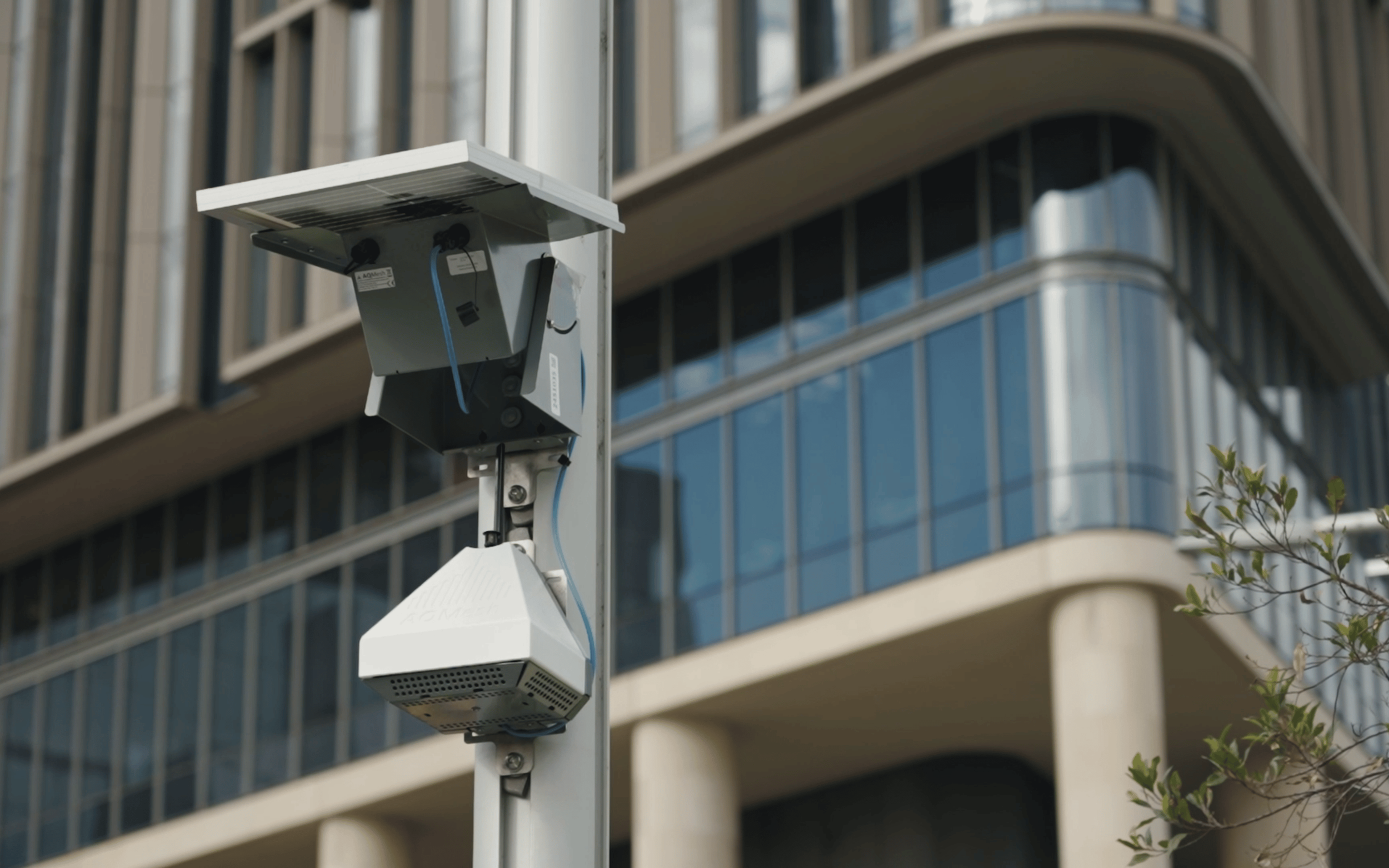
An OPENAIR sensor in Parramatta. Credit: UTS
NSW Councils can already access air quality monitoring data produced by the state government-operated network of 130 monitoring stations.
But government-operated air quality sensors don’t collect data at a local community level. “Many air quality issues are very localised. Busy road intersections, low lying areas and areas close to industry are often hotspots for poor air quality,” Mr Runcie says. “Before OPENAIR, it was very difficult for councils to collect air quality data from specific locations in their local government areas.”
NSSN survey distributed to local councils
The NSW Clean Air Strategy 2021-30 highlighted the need for communities to be better prepared for pollution events.
The NSW Smart Sensing Network distributed a survey to all local councils in NSW, seeking to know what air quality issues were of concern to them and to gauge their level of expertise in air quality monitoring.
“The results showed that councils face a wide range of air quality issues, from bushfire smoke to coal dust and transport related pollution, depending on their unique local context,” Mr Runcie says.
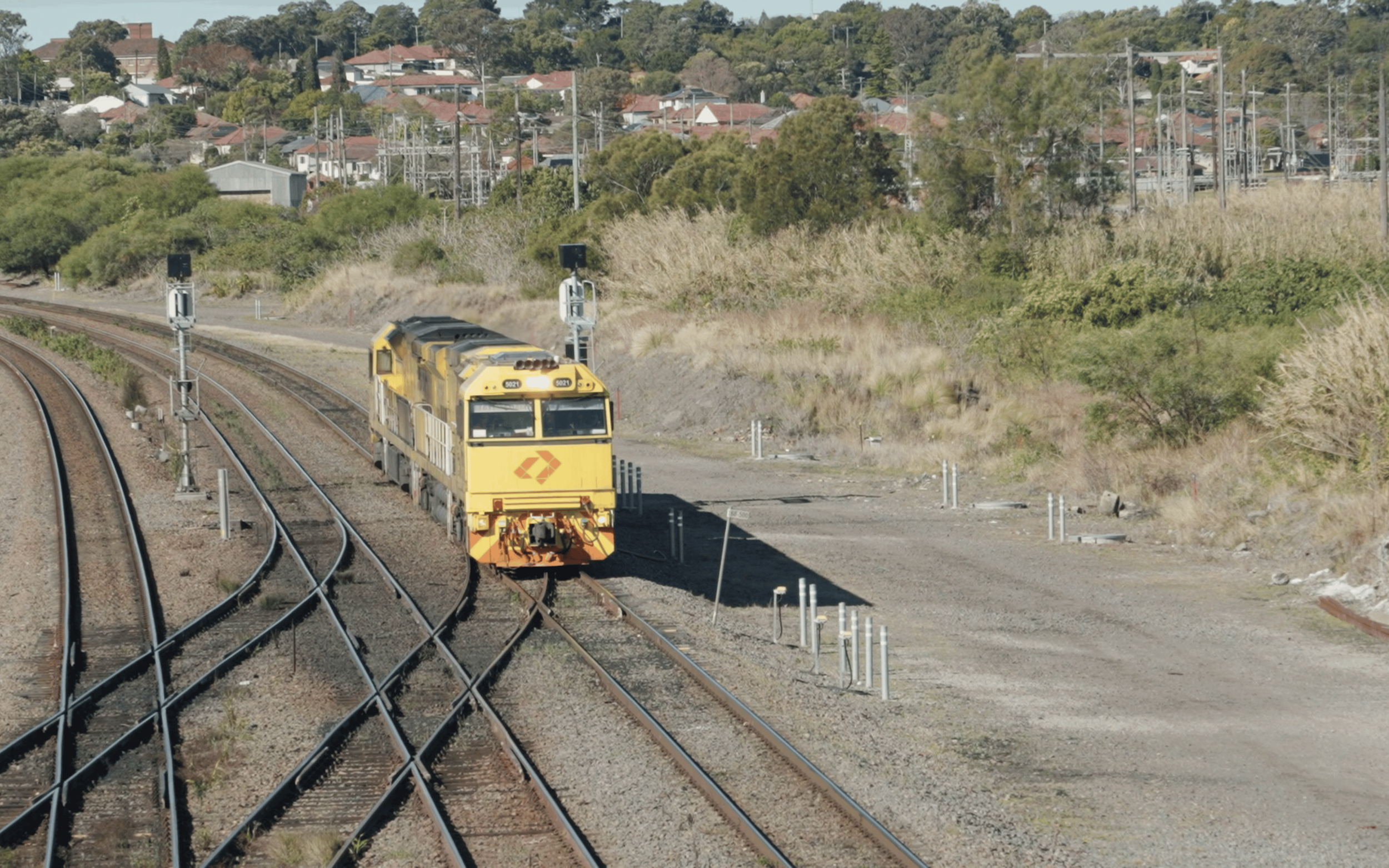
Up to 40 coal trains pass through Newcastle each day en route to the world’s largest coal port. The OPENAIR project is working to trace the source of the city’s coal dust. Credit: UTS
“The survey responses also showed that many councils needed a better understanding of available technology and technical know-how to deploy air monitoring sensors.”
Although affordable air quality sensors are available commercially, few local governments have the required knowledge or capability to successful procure, deploy and use these sensors.
The challenge for OPENAIR was how to build capability in local government so the sector can effectively use this technology.
OPENAIR launched
The OPENAIR project was officially launched in 2022.
It was funded by the NSW government, through the Department of Climate Change, Energy, the Environment and Water and the Smart Places Acceleration Program, which is managed by the government’s Smart Places team.
Researchers from five universities (UTS, University of Sydney, Western Sydney University, University of NSW and Australian National University) participated as did several small businesses.
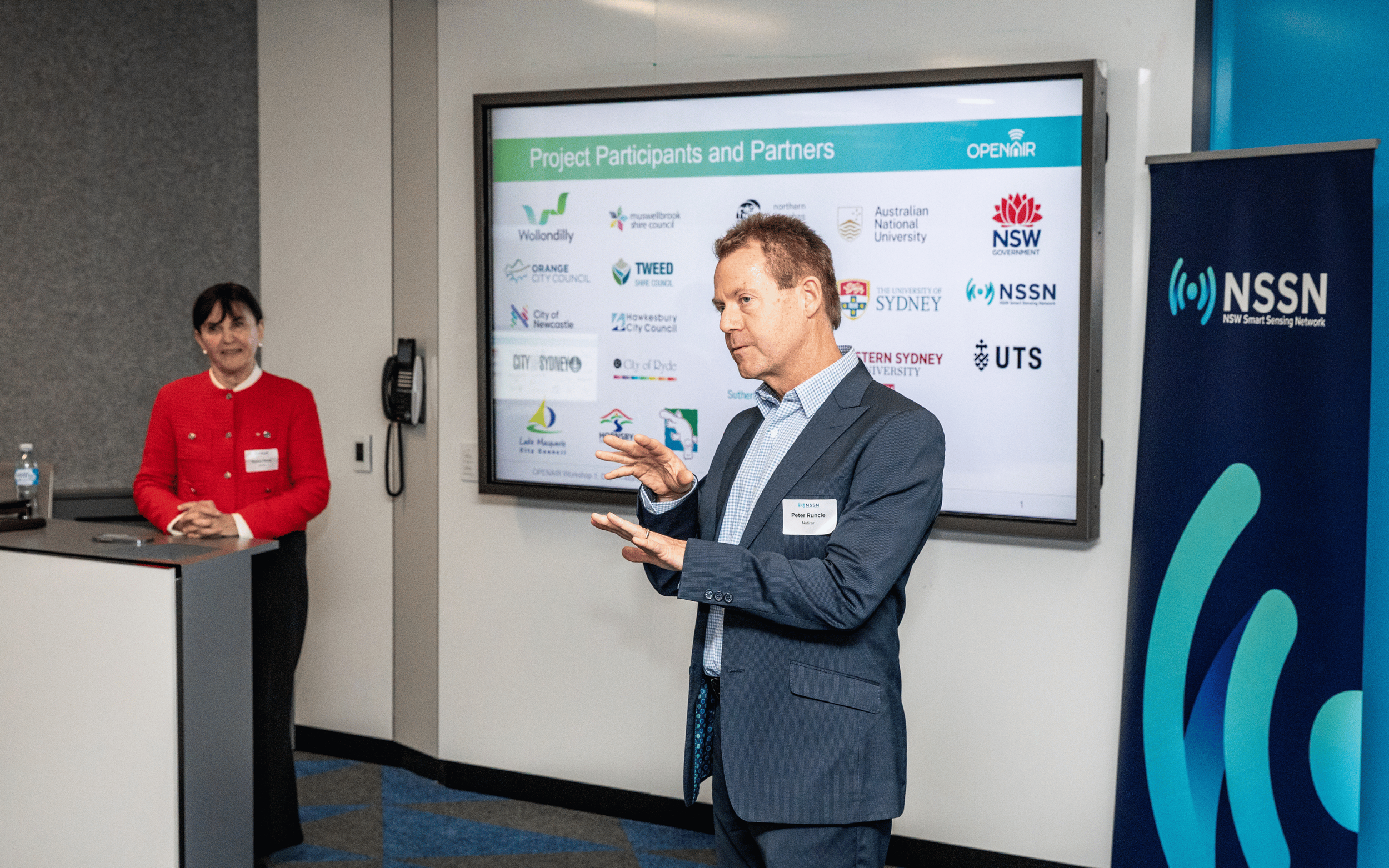
Former NSSN Board Chair Susan Pond and NSSN’s Natural Hazards & Smart Cities Theme Lead Peter Runcie at the official launch of OPENAIR. Credit: UTS

Researchers from five universities participated in OPENAIR. Credit: UTS
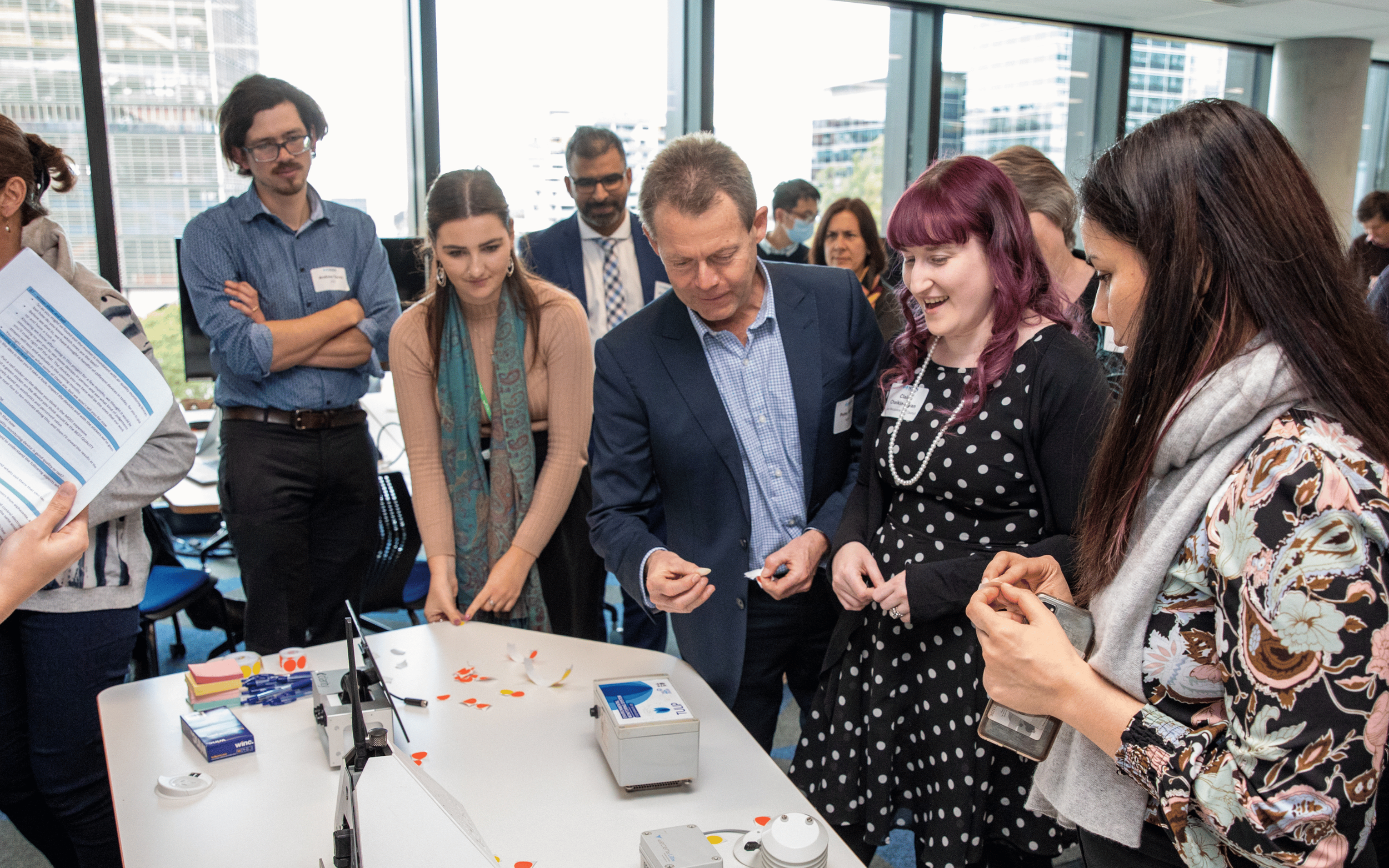
OPENAIR involved low-cost air quality sensors. Credit: UTS
As OPENAIR is hinged on close collaboration with councils – the end users of OPENAIR’s method and resources – their perspective and participation were crucial to the project’s success.
In January 2022, a cohort of six NSW councils – Lake Macquarie City Council, the City of Parramatta, Sutherland Shire Council, Tweed Shire Council, Muswellbrook Shire Council and Newcastle City Council – signed onto OPENAIR.
The councils installed low-cost air quality sensors in their local areas and met with the OPENAIR team on a weekly basis to share their experiences – lessons and challenges – and to form a ‘community of practice’ with other councils.

Lake Macquarie City Council also ran air quality sensor workshops for citizen scientists. Credit: UTS
During this time, the councils took part in four in-person and virtual workshops where they learned more from the project team about the technology and how to interpret and present the data captured.
“These were also great opportunities for councils to “compare notes” and learn from each other,” Mr Runcie says.
OPENAIR’s multiple achievements
The result was the establishment of Australia’s first government-backed best-practice guidelines for all aspects of council-led smart air quality monitoring.
There are now 64 publicly accessible resources available to download via the OPENAIR website.
These free-to-download resources, guide councils through collecting and analysing localised air quality sensing data so they can make informed decisions about how to respond to specific air quality issues such as smoke from bushfires.
The best practice guidance is broadly relevant to a range of IoT and smart sensing contexts and is a watershed contribution to our national data economy.
A first-of-its-kind pilot data sharing platform has also been developed to ingest and harmonise live air quality data streams from four different types of commercial sensing networks.
The platform enables data collected by council-operated sensors from several different commercial providers to be shared in a common format.
Access to this data is now available via the NSW Government’s SEED Air Quality Hub .
At scale, this data infrastructure can support consistent state-wide air quality data across all 128 NSW LGAs, linked on a single platform.
“There is no equivalent platform for real-time harmonised exchange of low-cost sensor data in Australia, making this a national first, with significant scaling potential,” Mr Runcie says.
“This provides unprecedented air quality data resolution for our cities and regions.” The OPENAIR data can support insights that improve local policy, planning and design decisions.
“The project and data have given councils the confidence to engage state government departments, industry and their communities in a much more informed manner,” Mr Runcie says.
Contact Peter Runcie.